When I taught middle school, I spent hours every day trying to differentiate the same lesson for a wide variety of learners. Some students needed extra scaffolding, others needed enrichment, and many fell somewhere in between. This was all before AI.
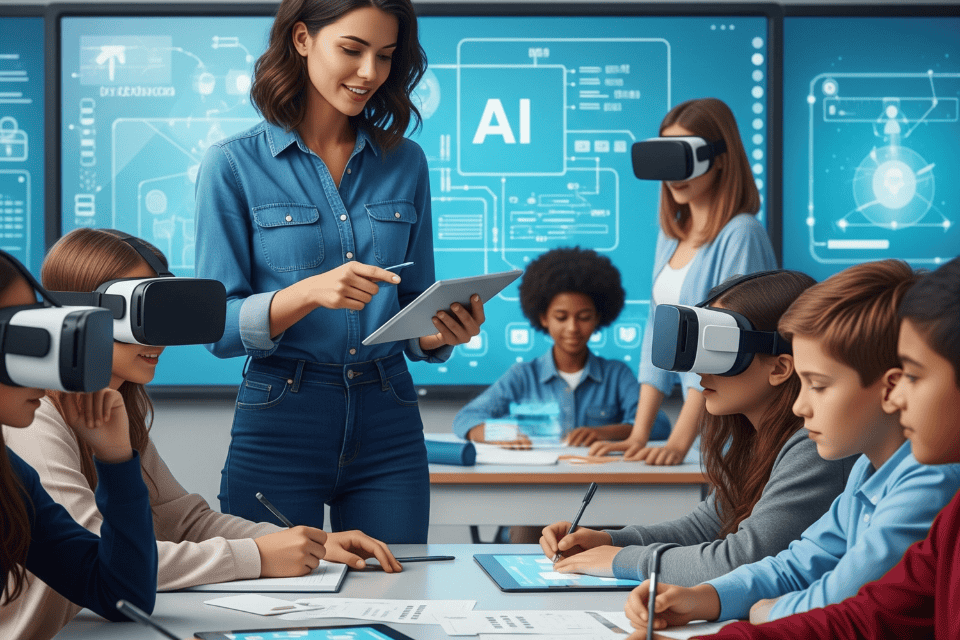
Today, some of the most exciting innovations are happening in edtech, and they’re already making a real difference in classrooms. Here are five of my favorites:
1. Personalized support for dyslexic students. AI can quickly analyze handwriting, speech, and assessment data to identify reading challenges, enabling fast, scalable interventions that used to require specialized evaluations.
2. Better access for deaf and hard-of-hearing students. AI-powered captioning tools allow students to follow lectures and participate in discussions more fully, improving engagement and learning outcomes.
3. Detecting and preventing cyberbullying. Tools like Bullstop automatically flag abusive messages, provide support to affected students, and alert administrators so interventions can happen early.
4. Building social-emotional skills. Milo, a social robot, helps children with autism and other developmental disabilities practice empathy, turn-taking, and conversation in a structured, supportive way.
5. Accelerating English language learning. AI tutors like Elsa let students practice real-world conversations at their level, boosting fluency and confidence faster than traditional classroom methods.
These examples show that AI isn’t just a promise for the future—it’s already helping teachers save time, students learn more, and classrooms become more inclusive.
💡 Question: Which of these AI applications excites you most, or what other tools have you seen making a real difference for students?